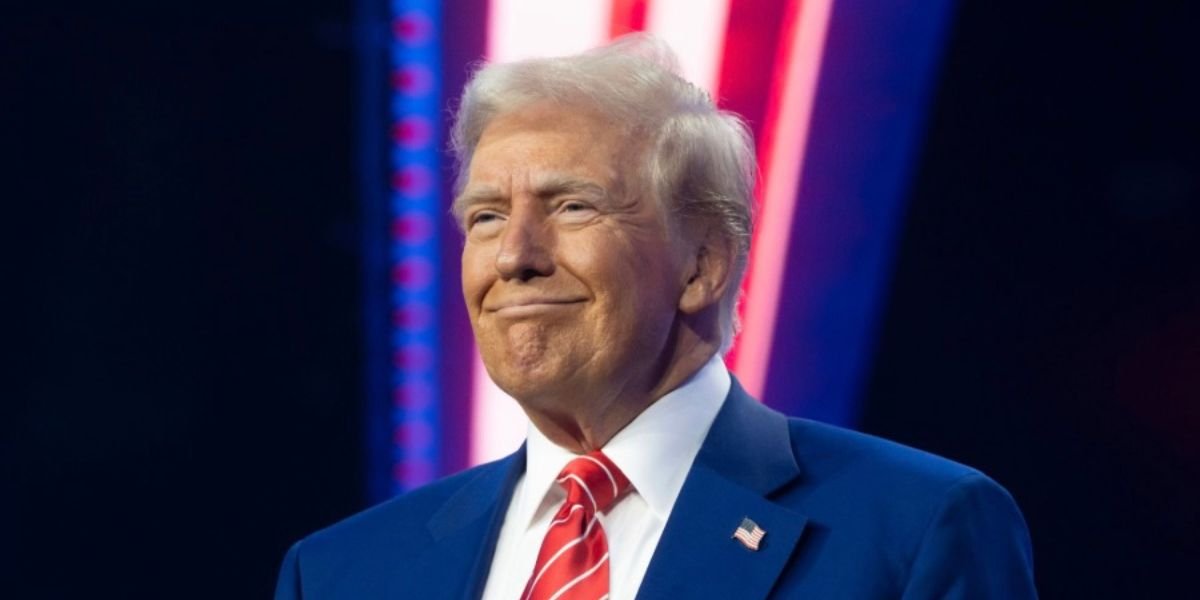
Trump announced that the United States and Iran had reached what he described as a “great settlement” and suggested that a formal signing ceremony would take place in Europe within days. According to Trump, the agreement had been approved by all relevant parties and would mark the successful conclusion of a conflict that had shaken global markets, disrupted energy supplies, and threatened to engulf the region in a wider war.
Financial markets immediately responded with optimism. Investors interpreted Trump’s declaration In one of the most remarkable diplomatic developments of the year, President Donald as evidence that diplomacy had finally triumphed over military confrontation. Oil prices stabilized, stock markets gained strength, and hopes emerged that one of the most dangerous geopolitical crises in recent memory was approaching a peaceful resolution.
Yet within hours of Trump’s announcement, a remarkable contradiction emerged. Iran’s Foreign Ministry publicly rejected the notion that a final agreement had been reached. Foreign Ministry spokesman Esmaeil Baghaei stated that no definitive settlement had yet been approved and that the matter remained under review by the country’s decision-making institutions. According to Tehran, discussions were continuing, and reports regarding an imminent signing ceremony were premature.
Soon afterward, a second challenge to Trump’s narrative emerged from Israel. According to a senior Israeli official quoted by Israeli media, Jerusalem had not been informed of any finalized U.S.-Iran agreement. The statement appeared to directly contradict Trump’s assertion that all concerned parties had approved the arrangement.
The result is an extraordinary diplomatic puzzle. The United States president says a deal exists and will soon be signed. Iran says no final agreement has been reached. Israel says it has no knowledge of such an agreement. Rarely has the international community witnessed such dramatically different descriptions of the same diplomatic process.
These conflicting narratives raise important questions. Is Trump announcing a political understanding that still awaits formal approval? Is he attempting to create momentum by publicly declaring success before negotiations are complete? Or are the parties engaged in a carefully coordinated diplomatic choreography in which public positions differ from private negotiations?. Whatever the answer, the contradictions reveal how fragile and complex modern diplomacy has become.
The uncertainty surrounding the agreement is particularly significant because it follows months of military confrontation. The conflict created severe economic consequences throughout the world. Energy markets became volatile. Inflationary pressures intensified. Businesses postponed investments. Consumers paid higher prices for fuel and essential goods.
At the same time that he announced the agreement, President Trump made another revelation that generated worldwide attention. He claimed that the United States had been secretly moving millions of barrels of oil associated with Venezuela and Iran through strategic waterways. According to Trump, American military capabilities had enabled these operations while preventing adversaries from interfering.
During his remarks, President Trump made statements that critics interpreted as an admission that Iranian oil had been secretly intercepted and diverted during the period of confrontation. According to his account, large quantities of oil allegedly reached international markets despite Iranian efforts to protect their exports. The President portrayed this as evidence of American operational superiority and an economic success for the United States.
He also referred to arrangements involving Venezuelan oil supplies, describing how American energy infrastructure had benefited from increased access to foreign crude. His comments suggested that U.S. refineries were operating at high capacity and generating substantial economic returns.
This goes far beyond merely moving oil through contested waterways, but amounts to the appropriation of resources that belong to sovereign nations and, ultimately, to the people of those countries. These valuable national assets associated with Iran and Venezuela were taken and utilized for the economic benefit of the United States while the populations of those countries continue to endure severe economic hardship.
What has troubled many observers is not only the claim itself but also the apparent pride with which it was presented. During the President’s remarks, those surrounding him appeared to applaud the operation as a strategic success. Their reaction conveyed a troubling message: that the acquisition of resources belonging to weaker nations is considered acceptable when carried out by a powerful state. Such actions would contribute to making wealthy countries wealthier while depriving already struggling populations of resources that could otherwise support economic development, public services, and improved living standards.
From this perspective, the issue extends beyond geopolitics and energy security. It becomes a question of ethics, sovereignty, and international justice. If the resources of one nation can be used for the benefit of another without the clear consent of its people and government, the principles of equality among nations and respect for sovereign rights are placed at risk.
The international community must apply the same standards to powerful countries that it expects from smaller states, ensuring that natural resources remain the property of the nations and peoples to whom they belong.
The timing of the peace initiative is equally significant. Many observers believe that economic realities played a major role in bringing all sides back to the negotiating table. Rising energy prices were creating inflationary pressures. Transportation costs increased. Food prices rose. Businesses faced uncertainty. Ordinary citizens felt the impact directly at gas stations and grocery stores.
For millions of Americans already struggling with the rising cost of living, the burden was particularly painful. Every increase in oil prices affected household budgets. Inflation reduced purchasing power. Businesses delayed investment decisions. Financial markets reflected growing anxiety over the possibility of a prolonged military confrontation.
Regardless of interpretation, Trump’s statements transformed what might have been a straightforward peace announcement into a much broader discussion about power, resources, and international legitimacy.
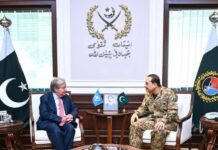
Yet perhaps the most overlooked aspect of the story is the role of diplomacy behind the scenes. During his remarks, President Trump specifically acknowledged the efforts of Pakistani Prime Minister Shehbaz Sharif and Field Marshal Syed Asim Munir. According to Trump, both leaders played an active role in facilitating communication between the parties and encouraging a diplomatic path forward.
Yet diplomacy and agreement are not the same thing. An agreement exists only when all principal parties publicly acknowledge and formally approve it. At present, that threshold has not yet been crossed. Trump’s confidence, Iran’s caution, and Israel’s apparent surprise illustrate that the final chapter of this diplomatic drama has not yet been written.
For now, the peace deal announced by Washington remains a promise rather than a confirmed reality. Whether it ultimately succeeds will depend not on declarations made before cameras, but on decisions made behind closed doors in Washington, Tehran, Jerusalem, and the diplomatic capitals of Europe. The destination may be peace, but the journey is clearly not over.