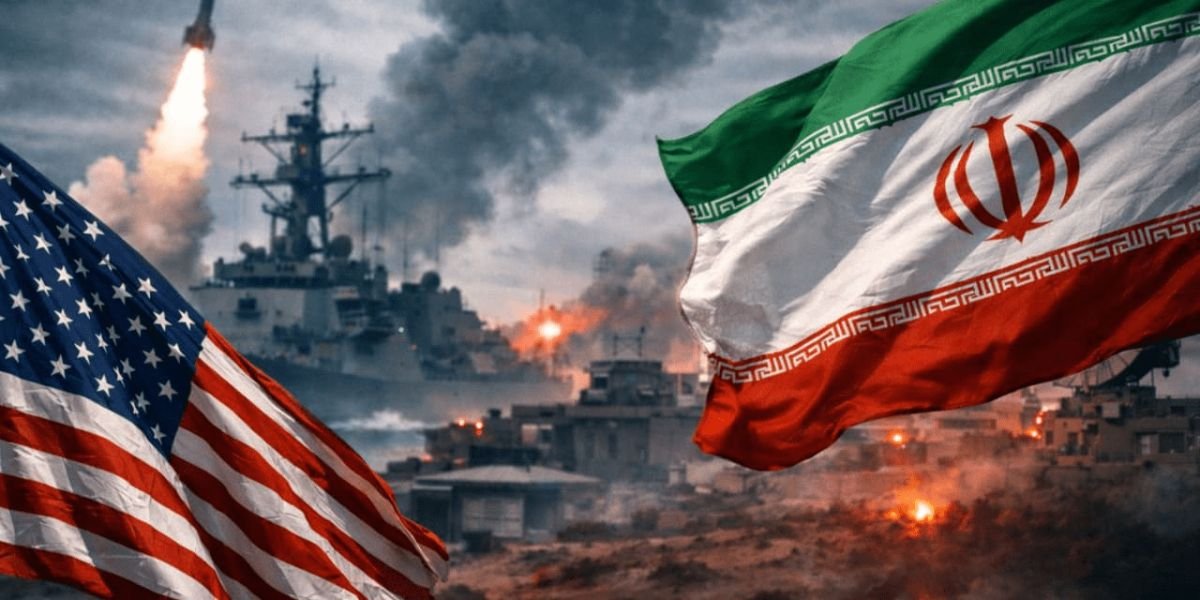
The global order is often described as rules-based, yet moments of crisis reveal how unevenly those rules are applied—and how fragile the system becomes when power, rather than consistency, defines legitimacy. The unfolding confrontation between the United States and Iran has brought that contradiction into sharp focus. What is justified as deterrence for some is condemned as provocation for others. That tension, long embedded in geopolitics, is now colliding with economic reality in ways that are shaking the foundations of the global system.
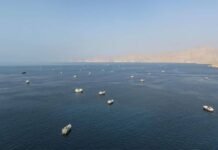
What began as a regional war has evolved into a systemic shock. At the center of this disruption lies the Strait of Hormuz, a narrow maritime corridor through which nearly 20 million barrels of oil pass each day—roughly a quarter of global seaborne supply—along with a critical share of liquefied natural gas. Even partial disruption to this artery has sent tremors across energy markets, tightened supply, and amplified uncertainty worldwide.
The economic consequences are already visible. Oil prices have moved into the $90–$95 per barrel range, placing nearly $2 billion in daily energy flows at risk. Even a temporary interruption translates into tens of billions of dollars in strain; if prolonged, the damage compounds into the hundreds of billions. Analysts warn that a sustained escalation could shave as much as one percentage point from global growth—equivalent to a loss of $1 trillion to $1.8 trillion annually.
Yet energy is only the entry point. The deeper crisis lies in how rapidly disruption spreads through interconnected systems. Asia, the region most dependent on Middle Eastern energy imports, has become the first major zone of impact. Across the Asia-Pacific, economies are experiencing cascading breakdowns—faster and more unpredictable than the shocks seen in previous global crises.
Air travel has been among the earliest casualties. Airlines across Asia are cutting routes as jet fuel prices rise sharply and supply becomes uncertain. Smaller carriers are reducing operations drastically to remain solvent, while larger airlines are recalibrating networks under mounting cost pressure. Passenger flows are weakening, tourism is contracting, and entire service economies—from hotels to transport—are under strain.
The disruption extends into manufacturing, the backbone of Asia’s growth. Energy-intensive industries are scaling back production as fuel and gas supplies tighten. Supply chains are under stress, and shortages of key inputs—from petrochemicals to industrial gases—are beginning to ripple across sectors, from textiles to electronics.
What is emerging is a pattern of cascading scarcity. Petrochemical shortages disrupt plastics and packaging. Fertilizer constraints threaten agricultural output. Transport disruptions increase costs across supply chains. Each bottleneck reinforces the next, creating a cycle that becomes progressively harder to contain.
At the human level, the consequences are severe. The United Nations Development Programme estimates that the Asia-Pacific region could suffer losses between $97 billion and $299 billion, with as many as 8.8 million people at risk of falling into poverty. For millions already living on narrow margins, rising food prices combined with declining incomes are proving destabilizing.
Farmers are leaving crops unharvested because transportation costs exceed returns. Workers are returning to rural areas as factories slow or shut down. Small businesses are struggling to survive as consumer demand weakens. What begins as an energy shock is rapidly transforming into a broader economic and social crisis.
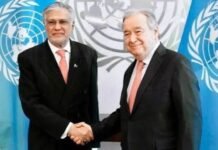
Against this backdrop, diplomacy—centered in Islamabad—remains deeply uncertain. Pakistan has positioned itself as a facilitator for a second round of talks, with preparations reportedly centered around high-security zones in the capital. Yet the diplomatic choreography is already faltering before it fully begins.
On the American side, uncertainty surrounds even the basic question of participation. The expected delegation—linked to senior figures within the administration—has not yet definitively departed the United States. Reports suggest that key officials remain on standby rather than en route, reflecting hesitation and unresolved internal calculations. The absence of a confirmed airborne delegation at this critical moment signals a lack of urgency that is difficult to reconcile with the gravity of the crisis.
On the Iranian side, the position is equally, if not more, guarded. Tehran has conveyed mixed signals—on one hand keeping the diplomatic channel nominally open, and on the other expressing strong reservations over what it views as coercive pressure, including maritime seizures and escalating rhetoric. Indications from Iranian officials suggest that participation in the second round is conditional, uncertain, and potentially subject to withdrawal if the current trajectory continues.
This dual hesitation has created what can only be described as a vacuum of commitment. The talks are planned, the venue is prepared, but the actors themselves appear unconvinced. It is this gap—between planning and participation—that has led many observers to a stark conclusion: the second round risks collapsing before it even formally begins.
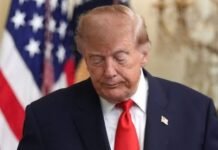
Compounding this uncertainty is a strategic narrative emerging from Washington. President Donald Trump has repeatedly framed the disruption in Middle Eastern energy flows not only as a threat but also as an opportunity. He has stated that large numbers of empty oil tankers are moving toward the United States to be filled with American oil and gas, suggesting a redirection of global energy demand. In parallel, U.S. exports have surged, reinforcing the perception that the United States could expand its role as a primary supplier to global markets.
This introduces a complex and troubling dimension. If the crisis is simultaneously viewed as a strategic opening for economic gain, the incentives for rapid de-escalation may weaken. Even the perception of such an alignment between conflict and commercial advantage risks eroding trust and complicating already fragile negotiations.
The risk, therefore, is no longer simply that talks may fail, but that they may never meaningfully commence. Without a credible diplomatic start, escalation becomes the default trajectory. Iran has already signaled that continued pressure could lead to broader retaliation, including potential targeting of regional energy infrastructure. Such actions would dramatically expand the scale of disruption and deepen the global crisis.
Financial markets are already reflecting this uncertainty. Energy stocks have strengthened while broader markets show volatility, capturing the divergence between sectors that benefit from higher prices and those that suffer from instability. Investors are navigating conflicting signals, reinforcing an atmosphere of unpredictability.
This is no longer a localized conflict. It is a multidimensional crisis—spanning energy, trade, finance, and geopolitics. It underscores how deeply the global economy depends on stable flows of energy and goods—and how quickly those flows can be disrupted.
The assumption that major powers can manage conflict without triggering global consequences is being tested in real time. Asia’s experience demonstrates that no region remains insulated. Disruptions propagate through supply chains, financial systems, and societies with remarkable speed.
The coming days will be decisive. If the second round of talks materializes with genuine commitment, it may create a narrow window for de-escalation. But if current signals persist—hesitation, conditionality, and strategic divergence—the talks may collapse before they begin, leaving the world to confront the consequences of renewed escalation.
The broader lesson is unmistakable. Global stability cannot rest on selective principles or assumptions of insulation. It depends on cooperation, consistency, and recognition of shared vulnerability. The forces now in motion—scarcity, uncertainty, and interdependence—are reshaping the global landscape.
At this critical juncture, the world stands between two uncertain paths: a fragile and hesitant diplomacy that may yet falter, or a return to the flames of war with consequences that could reverberate far beyond the immediate conflict.