
By Muhammad Ishaq
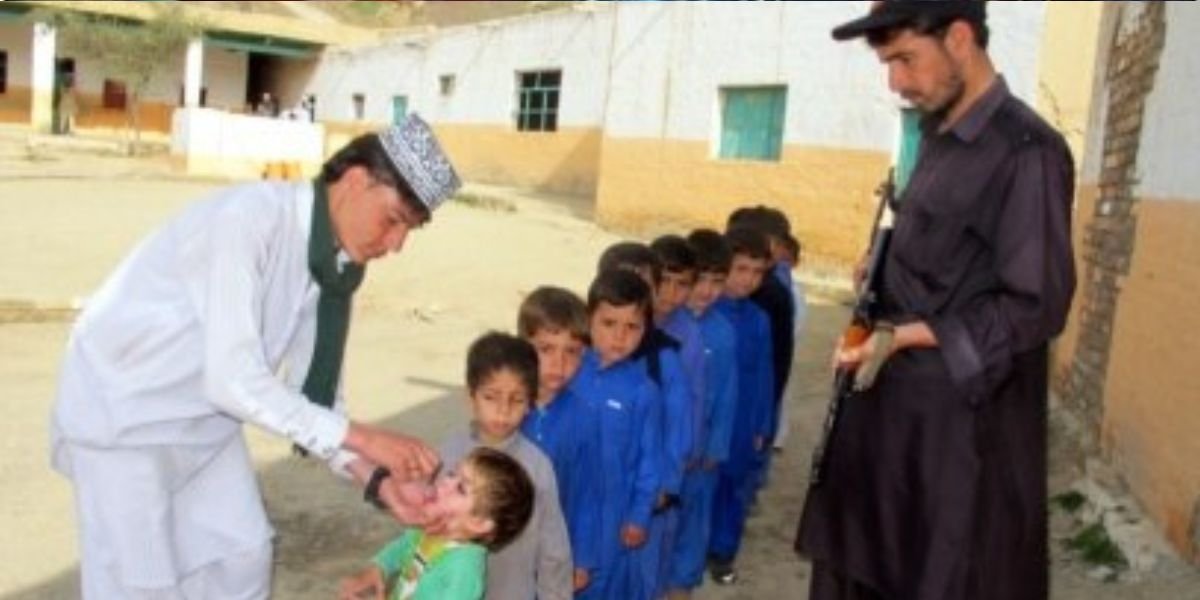
A few days ago, two police officers were killed in Bajaur while protecting a polio vaccination team. News like this appears for a day or two, people react briefly, and then the country moves on. But the reality behind these incidents is much bigger than a routine security story. In places like Bajaur, polio vaccination is no longer just a health campaign; it has become tied to politics, mistrust, religion, and the complicated relationship between the state and tribal communities.
Pakistan has spent decades trying to eliminate polio. Billions of rupees have been spent, thousands of campaigns have been launched, and international organizations continue to support the effort. However, Pakistan and Afghanistan remain the only countries where the virus has not been fully eradicated. That alone should force us to ask an uncomfortable question: Why is this problem still alive after so many years?
People sitting in big cities often assume the answer is ignorance. They think parents in tribal areas simply “do not understand” vaccines. But after studying the issue and speaking to people from Bajaur, I realized that the matter is far more complicated than that.
In many tribal districts, there is a deep trust deficit between the public and the state. For years, these regions have experienced militancy, military operations, displacement, poverty, and political neglect. Basic facilities such as schools, hospitals, roads, and clean drinking water are still missing in many areas. So, when government officials suddenly appear at people’s doors every few months asking them to vaccinate their children, many residents naturally question the state’s intentions.
The damage caused by the fake vaccination campaign used during the hunt for Osama bin Laden still exists in people’s minds. That incident changed how many communities viewed vaccination programs, especially in Khyber Pakhtunkhwa and the former tribal areas. For some families, the issue stopped being medical long ago; it became political.
Then there are the conspiracy theories. During my research, many people repeated the same claims: vaccines cause infertility, they contain forbidden ingredients, or they are part of a Western plan against Muslims. From an educated urban perspective, these ideas sound irrational. But in areas where literacy is low and mistrust is already high, such narratives spread very quickly.
Religious leaders also play a huge role here. In tribal society, many people trust local ulema more than politicians or state officials. Some religious scholars have openly supported polio campaigns and encouraged parents to vaccinate their children. Others have done the opposite by spreading doubts or remaining silent when misinformation spreads. The state often ignores this reality and treats vaccination as only a medical issue, when in fact it is also a social and religious issue.
Security has made the situation even worse. Polio workers in Pakistan do not just carry vaccine boxes; sometimes they work under armed protection. That alone says a lot about the environment in which these campaigns operate. The recent killing of police officers in Bajaur is another reminder that even healthcare workers and security personnel are not safe from violence.
But force alone cannot solve this problem. Sending more police to accompany vaccination teams may protect workers temporarily, but it does not build public trust. People are more likely to cooperate when they feel heard, respected, and included.
The state needs to understand that public health campaigns cannot succeed in isolation from the social and political realities around them. If communities continue to feel abandoned in every other aspect of life, resistance toward state-led programs will remain. Vaccination campaigns need long-term awareness efforts, local participation, engagement with religious leaders, and genuine development in neglected areas.
The tragedy is that children suffer the most. Polio does not care about politics, religion, or borders. Every child left unvaccinated remains vulnerable to a disease that the rest of the world defeated years ago.
What happened in Bajaur a few days ago should not be seen as just another attack. It reflects a much deeper problem inside Pakistan’s tribal regions—a problem of insecurity, mistrust, and weak governance. Until those issues are addressed seriously, the fight against polio will remain incomplete.
The author is a student of International Relations at Quaid-i-Azam University (QAU), Islamabad.