By Dr. Muhammad Shoaib
Humans and animals coexist together from the start of life on Planet Earth. Human beings
domesticate and utilize animals for meat, milk, hides, other by-products and for draft purposes. There is a perpetual intimate interaction between human beings and animals.
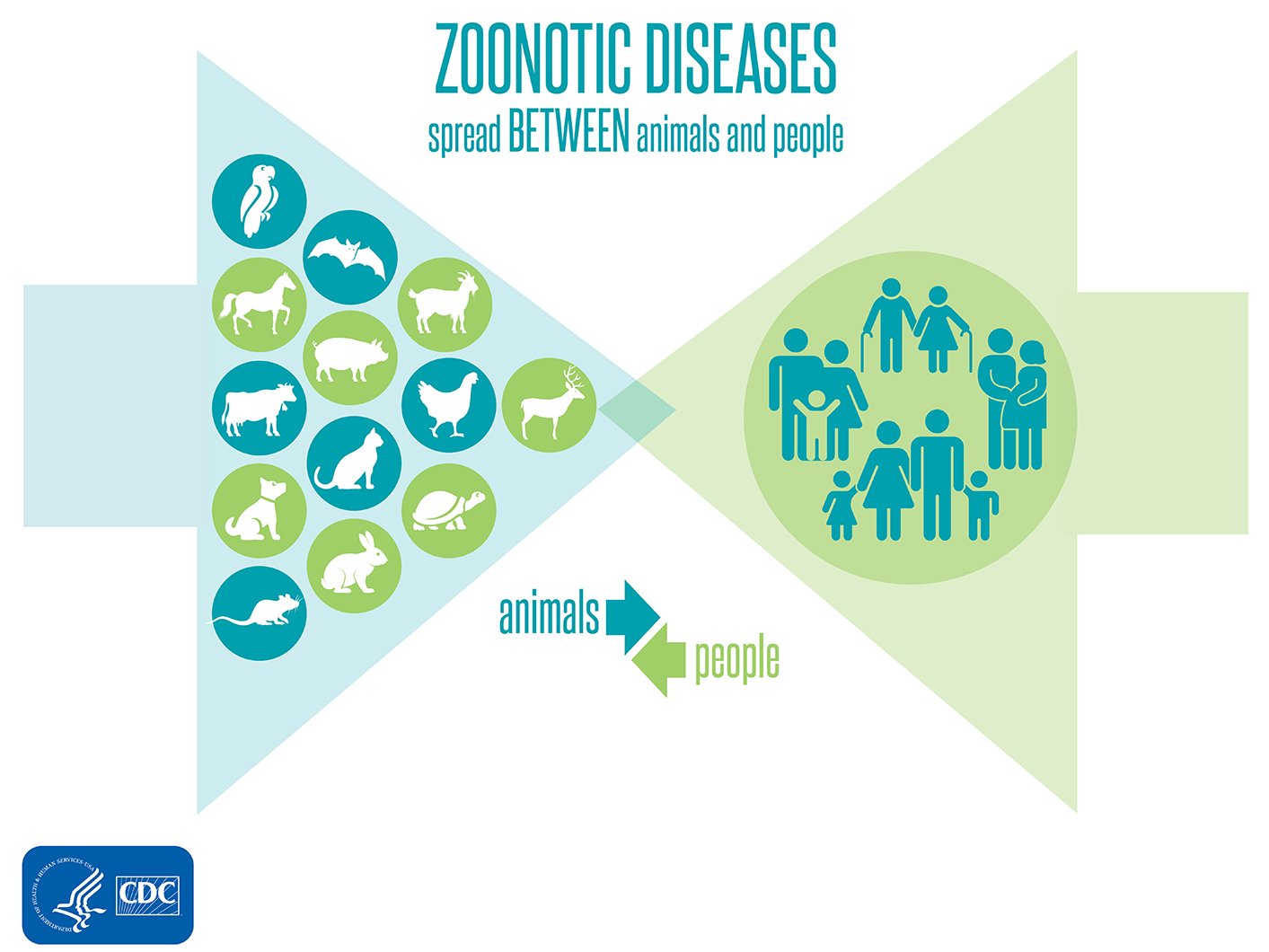
Frequency of companionship with pet animals has also soared during last couple of decades. This close communication has led to dissemination of infectious diseases between animals and humans. The diseases which are transmitted from animals to humans are known as zoonotic diseases. Infectious agents which spread between animals and people are called zoonotic agents. Transmission of diseases from animals to humans is called zooanthroponosis while transmission of diseases from humans to animals is known as anthropoozoonosis. Amphizoonosis is the spread of diseases from animals to humans and vice versa.
Zoonotic agents consist of variety of pathogens including bacteria, viruses, yeasts and parasites. Zoonotic diseases are very common and cosmopolitan in nature and function. Intensity of these diseases varies from being mild ailments to extremely serious and fatal conditions.
According to Center for Disease Control and Prevention (CDC), 60% of the existing infectious diseases can be acquired by humans from animals. It is frightening to know that 75% of newly emerging infectious diseases are zoonotic in nature. Every year, more than a billion cases of zoonotic diseases are reported as per reports of World Health Organization (WHO). Annually, millions of deaths occur due to zoonotic infectious pathogens.
Humans can catch infectious agents from animals through numerous ways. These zoonotic diseases can be transmitted to human beings by direct contact (contact with different secretions/excretions of animals i.e. blood, urine, feaces, saliva etc.) or indirect contact (contact with inanimate objects contaminated by infected animals). Zoonotic diseases can be food borne that is transmitted by ingesting contaminated milk, meat, eggs and water.
The most important route of transmission of zoonotic diseases is through vectors, which are the ectoparasites (e.g. insects) that transmit diseases from animals to humans through biting. Control of vector-borne zoonotic diseases is extremely difficult as insects are ubiquitous in nature.
The most common endemic zoonotic diseases include Plague, Leishmaniasis, Rabies, and Dengue fever. Some serious and fatal zoonotic pathogens include Ebola virus, Crimean-Congo hemorrhagic fever virus, Nipah virus and West Nile virus. Newly emerging zoonotic microbes include Rift Valley fever, pandemic influenza (H1N1), Yellow fever, Avian Influenza (H5N1) and the Middle East respiratory syndrome coronavirus. Almost all of the emerging and resurrecting zoonotic diseases are vector borne.
Pakistan, like other developing countries, also faces the music of handling and managing
emerging and re-emerging zoonotic diseases. Due to improper quarantine policy, these diseases pose a major threat to health of people residing in various parts of Pakistan. Sub-tropical climate and favorable temperature ranges make Pakistan a suitable place for propagation of vectors responsible for transmission of zoonotic infectious agents.
In contemporary times, epidemic of fatal zoonotic disease known as Crimean-Congo hemorrhagic fever (CCHF) is reported to cause infection in Pakistan. CCHF is a viral disease caused by Arbo-virus belonging to family Bunyaviridae. This virus is transmitted to humans by Hyalomma ticks.
Frequent movement of animals on occasions like ‘Eid-Ul-Adha’ also contributes to the spread of zoonotic microbes across the country. Leishmaniasis is another noteworthy zoonotic disease caused by Leishmania donovani. This parasite is transmitted to humans by sand flies.
Furthermore, Monkeypox, another re-emerging problem now days, has caused infection among humans. Initially this disease was reported in monkeys, and transmission to human beings was first reported in 1970 in Democratic Republic of the Congo. Currently, cases of
Monkeypox are soaring worldwide which is an imminent threat to public health.
Endemic, emerging, re-emerging, neglected and other potential zoonotic diseases are a global health problem and a perpetually consistent threat to human’s health. “One Health” is a new concept in epidemiology and public health for controlling the spread of zoonotic diseases. Under the umbrella of “One Health”, pattern of diseases transmitted between humans and animals is analyzed.
To ameliorate the current situation, it is an urgent need of these times that health and veterinary professionals should come forward and formulate a comprehensive policy for prevention and spread of zoonotic ailments for creating the safe zone for survival of
all living creatures on this earth. (Edited by Khadijah Kamili)
*Author is lecturer at PMAS Arid Agriculture University, Rawalpindi
Also Read: UK-Pakistani awarded prestigious Pegasus scholarship