Home Tags Islamabad

Tag: islamabad

Pakistan and the Trillion-Dollar Peace Dividend

Islamabad may host second round of US-Iran talks after initial meeting ends without breakthrough

At a moment when the world stood dangerously close to a wider regional inferno, Pakistan has emerged not merely as a bystander, but as one of the few states able to talk to all sides and keep diplomacy alive. As of April 15, 2026, there is still no final U.S.-Iran agreement, and no official ceasefire extension has been publicly confirmed. But Washington says fresh talks may happen in Pakistan within days, President Trump is signaling optimism, Pakistan’s military chief has been in Tehran, and regional diplomacy is now visibly revolving around Pakistani mediation. That alone marks a dramatic shift in Pakistan’s standing in the current geopolitical crisis.

The facts matter. The first 21-hour round of talks in Islamabad ended without a deal, with Vice President JD Vance saying Iran had not accepted core U.S. demands, especially on the nuclear issue. Yet Pakistan did not walk away after that setback. Prime Minister Shehbaz Sharif publicly said Pakistan’s “full effort” remained focused on ending the conflict, while Field Marshal Asim Munir traveled to Tehran in an attempt to narrow differences before the ceasefire expires. That is the real significance of Pakistan’s role: not that it solved the war in one stroke, but that it kept open the only serious diplomatic corridor after formal negotiations collapsed.

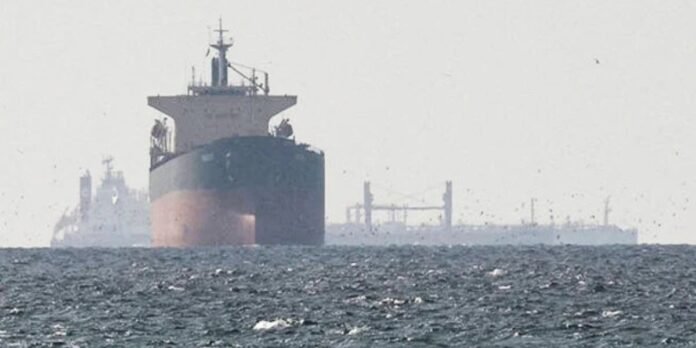
This matter because the war’s costs are no longer theoretical. The conflict that began on February 28 has already killed more than 5,000 people across the region. The repair costs to damaged energy infrastructure alone may reach as high as $58 billion. The Strait of Hormuz, through which about one-fifth of global oil and LNG normally passes, remains the central choke point in the conflict. Even after the April 8 ceasefire, traffic through Hormuz had at one stage fallen to less than 10% of normal, while ships and crews remained trapped and insurers, traders and governments braced for a prolonged shock.

That is why Pakistan’s diplomatic intervention should be understood not only in moral or political terms, but in financial ones. No government or international institution has yet issued an official dollar figure for what Pakistan has “saved.” Still, scenario-based calculations grounded in World Bank, IMF and Reuters reporting suggest that if Pakistan’s mediation helps convert the fragile ceasefire into a durable settlement, the avoided losses could plausibly run from the high hundreds of billions into the low trillions. This is not propaganda; it is what the macroeconomic numbers imply.

Start with global growth. The IMF cut its 2026 global growth forecast to 3.1% because of the war and warned that, in a severe scenario, growth could fall to 2.0%. The World Bank separately warned that even in a best case the war could shave 0.3 to 0.4 percentage points off global growth, and as much as 1 point in a prolonged conflict. WTTC data showing global travel and tourism alone contributed $11.7 trillion in 2025, equal to 10.3% of global GDP, implying a world economy of roughly $113.6 trillion. On that basis, preventing a 0.3–0.4 point hit means protecting roughly $341 billion to $454 billion of global output. Preventing a 1-point hit protects about $1.14 trillion. Preventing the IMF’s 1.1-point slide from 3.1% to 2.0% implies roughly $1.25 trillion in avoided output loss.

And that is only the macro layer. Add the already-estimated $58 billion energy repair bill, the IMF’s warning that more than a dozen countries may need $20 billion to $50 billion in support, the World Bank’s preparedness to mobilize $80 billion to $100 billion for war-hit economies, and the UNDP estimate that just $6 billion in emergency support could keep 32 million people from falling into poverty due to the war-driven energy shock. Even before counting military fuel, munitions, deployment costs, higher insurance, rerouted shipping, lost industrial output and inflation spillovers, the visible tally of avoided or containable damage quickly rises into the hundreds of billions.

Markets themselves are already pricing the value of diplomacy. Gulf stock markets rising on renewed hopes of U.S.-Iran talks, while Wall Street pushed to record highs as investors bet the worst might be avoided. Brent crude, though still elevated, has pulled back from the panic zone above $100 and hovered around $95 on April 15 as traders responded to the possibility of renewed negotiations. Eleven finance ministers meeting around the IMF-World Bank spring meetings called for full implementation of the ceasefire, warning that even if the shooting stops, the economic aftershocks on inflation, growth and debt will linger. That is the clearest evidence that diplomacy is not a symbolic exercise; it is already functioning as a stabilizing economic asset.

Pakistan’s importance in this crisis is therefore not accidental. It has managed to present itself as credible to Washington, acceptable to Tehran, relevant to Gulf capitals and increasingly necessary to wider regional diplomacy that now also involves Turkey, Saudi Arabia and Egypt. President Erdogan has openly referenced Pakistan’s mediator role, while the White House has acknowledged Pakistan as the likely venue for the next round. In a fractured region where many actors are aligned too heavily with one bloc or another, Pakistan’s value lies in being politically connected, militarily serious, diplomatically flexible and geographically impossible to ignore.

Still, the argument must remain grounded. Pakistan has not yet “saved the world” in any final sense, because the war is not formally over, the Hormuz issue is unresolved, Lebanon remains volatile, and the hardest questions — nuclear verification, sanctions, shipping access and war damages — are still on the table. The IAEA chief has warned that any real settlement will require detailed inspections, and Reuters says U.S. economic pressure on Iran is still intensifying even while diplomacy continues. So the credit Pakistan deserves today is not for a completed peace, but for preventing diplomatic collapse and preserving the one path that could still save the region from a second explosion.

If the second round succeeds, Pakistan’s diplomatic dividend will be immense. It will not simply have hosted talks; it will have helped prevent a wider energy shock, a deeper inflation spiral, further destruction across Iran and the region, and perhaps a global recession. In scenario terms, that would place Pakistan’s peace dividend somewhere between roughly $341 billion and $1.25 trillion in avoided world output loss, before adding infrastructure, humanitarian and fiscal savings. For a country long described as fragile, indebted and peripheral, that would be a stunning reversal. Pakistan may still be economically constrained, but in this crisis it has demonstrated something rarer than wealth: strategic usefulness. And in the modern world order, the country that can stop a war may matter more than the country that can afford one.
 

Advertisment

PM Shehbaz Sharif arrives in Saudi Arabia for four-day official visit

Shehbaz Sharif Arrives in Saudi Arabia for Four-Day Official Visit

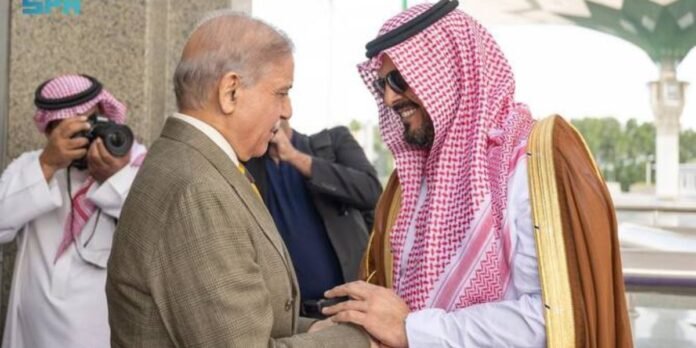
ISLAMABAD: Pakistan’s Prime Minister Shehbaz Sharif arrived in Saudi Arabia on Wednesday, beginning a four-day diplomatic visit, as Islamabad intensifies efforts ahead of a possible second round of US-Iran peace talks.

He was received by the Deputy Governor of Makkah Region, Prince Saud bin Mishaal bin Abdulaziz, at King Abdulaziz International Airport, a PM office statement said.

He is accompanied by Deputy Prime Minister and Foreign Minister Ishaq Dar, Information Minister Attaullah Tarar, and Special Assistant Tariq Fatemi.

“The Prime Minister will hold a bilateral meeting with the Saudi Crown Prince and Prime Minister Prince Muhammad bin Salman bin Abdulaziz Al-Saud. The meeting will include discussions about the deepening of the Pakistan-Saudi Arabia partnership, as well as the wider situation in the region,” it said.

In Turkiye, he will take part in the fifth Antalya Diplomacy Forum and present Pakistan’s position in the Leaders’ Panel along with other world leaders, the FO added.

“Pakistan’s participation in the forum reflects its continued commitment to constructive diplomacy, multilateral cooperation, and meaningful engagement with the international community on issues of global importance,” the FO statement said.

On the sidelines of the forum, PM Shehbaz was “expected to hold bilateral meetings with President Recep Tayyip Erdoğan and other key world leaders”.

Islamabad intensified efforts to act as a mediator between the United States and Iran to end the war that had engulfed the Middle East, leading to a fragile, temporary ceasefire and a first round of talks in Islamabad.

Also read:Islamabad could host upcoming Iran-US talks: Trump

Advertisment

China urges restraint after Donald Trump threatens Hormuz blockade

China urges restraint after Donald Trump threatens Hormuz blockade

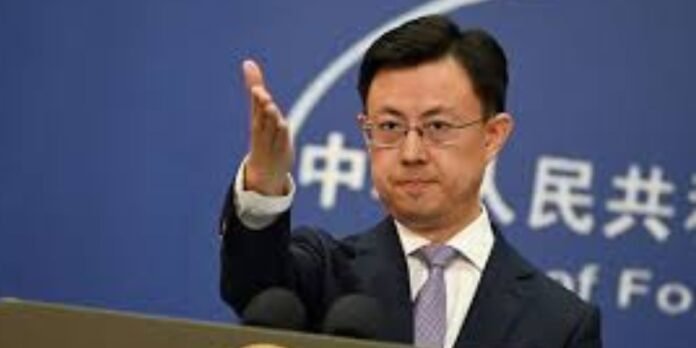
BEIJING: China urged calm and restraint by all sides on Monday after U.S. President Donald Trump’s threat to ​blockade the Strait of Hormuz following the failure of weekend ‌talks in Islamabad aimed at ending the Iran war, Reuters reported.

Chinese Foreign Ministry spokesperson Guo Jiakun added the Strait of Hormuz remains a vital artery for global trade and energy flows, adding that maintaining maritime security is crucial for the international community.

“China hopes ​the relevant parties will abide by the temporary ceasefire arrangements, remain committed ​to resolving disputes through political and diplomatic means, and avoid a resumption of hostilities,” he stated.

China stood ready to “play a positive and constructive role” in resolving the ​crisis, Guo added, calling the opening talks in the Pakistani capital a ​step in a direction conducive to easing tension.

Guo Jiakun added disruptions in navigation in the region have historical roots dating back to the Iran-Iraq War.  He noted that the long-term solution lies in an immediate ceasefire and sustained regional stability.

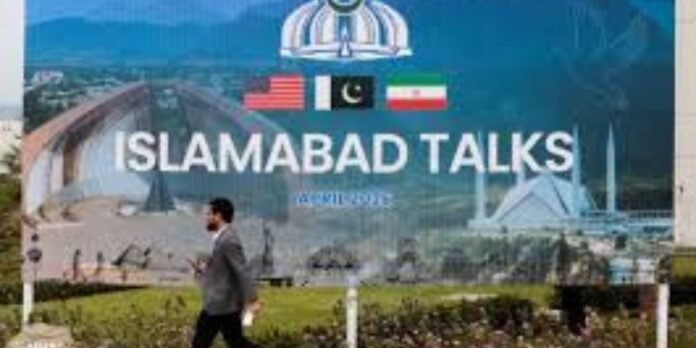
Direct talk between the United States and Iran — known as the Islamabad Talks — ended without an agreement today.

Delegations from the two sides, with Ghalibaf leading the Iranian side and US Vice President JD Vance leading Washington’s effort, had met in Pakistan’s capital Islamabad on Saturday for talks mediated by Pakistan; however, the parties concluded without reaching any agreement.

After the end of the Islamabad round of talks without agreement or conclusion, Trump’s remarks on tightening maritime restrictions in the Strait of Hormuz further heightened tensions in a region already on edge due to stalled diplomacy.

China urged all parties to exercise calm and avoid escalation, reiterating that dialogue and political settlement remain the only viable path forward.

Alsor read:Police constable killed, four injured in attack on polio team security escort in KP

Advertisment

NDMA issues rain alert across Punjab, KP, AJK and GB from April 12–17

NDMA issues rain alert across Punjab, KP, AJK and GB from April 12–17

ISLAMABAD: The National Disaster Management Authority (NDMA) on Saturday predicted a rain alert for Punjab, Khyber-Pakhtunkhwa (K-P), Azad Kashmir and Gilgit-Baltistan (G-B) from April 12 to 17.

As per the NDMA advisory, intermittent rain was expected in Punjab, K-P, Azad Kashmir and G-B, accompanied by thunderstorms, dust storms, and strong winds, with chances of hailstorms at isolated spots.

It further added that rainfall is expected in Islamabad and several cities of Punjab, including Murree, Rawalpindi, Attock, Jhelum, Chakwal, Gujrat, Sialkot, Lahore, Mianwali, and Mandi Bahauddin.

The NDMA also stated that snowfall was also expected in the mountainous areas of G-B, Azad Kashmir, and K-P over the next week.

It also said that in K-P, various districts, including Chitral, Dir, Swat, Shangla, Kohistan, Mansehra, Abbottabad, and Haripur, are likely to get rain with thunderstorms. Swabi, Charsadda, Mardan, Nowshera, Kohat, Karak, Bannu, and Dera Ismail Khan may also witness rain accompanied by strong winds.

“strong winds, lightning, and hailstorms may damage weak structures, trees and power lines. Rainfall could make roads slippery and disrupt traffic flow, while snowfall in upper areas may affect movement,” The NDMA warned.

Also read:Finance minister departs for US to attend IMF–World Bank Spring Meetings 2026

Advertisment

Finance minister departs for US to attend IMF–World Bank Spring Meetings 2026

Finance minister departs for US to attend IMF–World Bank Spring Meetings 2026

ISLAMABAD: Pakistan’s Finance Minister Muhammad Aurangzeb has left for the United States to participate in the World Bank Group–International Monetary Fund (IMF) spring meetings 2026, where he is set to engage international financial leaders, policymakers and investors in a packed schedule of over 50 meetings, the Pakistani finance ministry said on Saturday.

According to the finance ministry, the IMF-World Bank spring meetings, scheduled to be held in Washington on April 13-18, will bring together central bankers, finance ministers and private sector leaders to discuss the global economy and financial stability, featuring seminars, briefings and plenary sessions, including the International Monetary and Financial Committee (IMFC).

Mr Aurangzeb’s visit includes discussions with officials from the US administration, including the State Department and the Treasury, as well as a meeting with US Trade Representative Jamieson Greer to strengthen economic cooperation and support reform initiatives of Pakistan.

Among important multilateral engagements, Aurangzeb will attend the G-24 finance ministers’ meeting and the coalition of finance ministers for climate action, and attend the policy dialogues on global economic stability, climate finance and financial reforms.

The finance ministry further added the visit highlights Pakistan’s commitment to macroeconomic stability, structural reforms and strengthening partnerships with international financial institutions and global stakeholders to achieve “sustainable and inclusive economic growth.”

Also read:Step toward stability’: JD Vance, Shehbaz Sharif meet before Islamabad dialogue


Advertisment

‘Step toward stability’: JD Vance, Shehbaz Sharif meet before Islamabad dialogue

‘Step toward stability’: JD Vance, Shehbaz Sharif meet before Islamabad dialogue

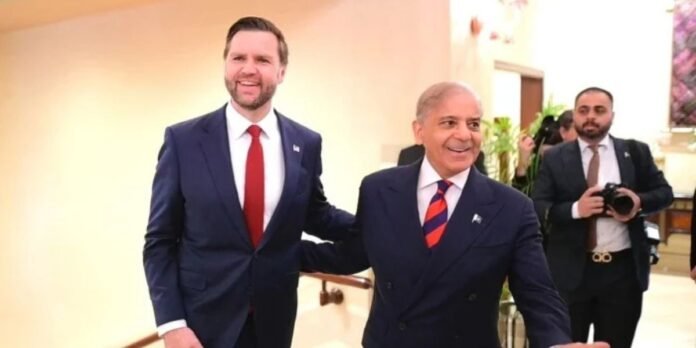
ISLAMABAD: Pakistan’s Prime Minister Shehbaz Sharif on Saturday met US Vice President JD Vance, along with Special Envoy Steve Witkoff and Jared Kushner, at the Prime Minister’s Office in Islamabad.

According to the prime minister office, he was assisted by Deputy Prime Minister and Foreign Minister Ishaq Dar and Interior Minister Mohsin Naqvi.

“Commending the commitment of both delegations to engage constructively, the prime minister expressed the hope that these talks would serve as a stepping stone toward durable peace in the region,” read the statement.

The PM reiterated that Pakistan would continue to facilitate efforts by both sides to make progress towards a sustainable resolution of the conflict.

“A temporary ceasefire has been announced, but now an even more difficult stage lies ahead: the stage of achieving a lasting ceasefire, of resolving complicated issues through negotiations,” PM Shehbaz Sharif stated.

“This is that stage which, in English, is called the equivalent of ‘make or break.’”

Mr Sharif added leaders from both countries were attending at Pakistan’s invitation and pledged that his government would “make every possible effort to make these talks successful”.

“In response to my sincere invitation, the leaders of both countries are coming to Islamabad. There, negotiations will be held for the establishment of peace,” he said in an address to the nation.

The PM was assisted by Deputy Prime Minister and Foreign Minister Ishaq Dar and Interior Minister Mohsin Raza Naqvi.

The talks, which is being hosted by Islamabad, would be the first direct high-level engagement between Washington and Tehran since 1979.

Tehran and the United States are holding talks in Islamabad under heavy security, as part of efforts to build on a fragile two-week ceasefire.

Earlier, Iranian’s officials arrived in Pakistan early Saturday to participate in important talks with the United States, aimed at securing a lasting solution of their ongoing war.

The 14-member delegation led by Iran’s Parliament Speaker Mohammad Bagher Ghalibaf, includes Foreign Minister Abbas Araghchi, Secretary of the Supreme National Security Council Ali Akbar Ahmadian, Central Bank Governor Abdolnaser Hemmati, former IRGC commander Mohammad Bagher Zolghadr and others.

Also, the US voice president JD Vance and his delegation arrived Islamabad under tight security arrangements ahead of the talks. The delegation includes Donald Trump’s son-in-law, Jared Kushner, and special envoy Steve Witkoff.

Also read:US Vice President JD Vance arrives in Pakistan for peace talks with Iran


Advertisment

PM, president extend Easter greetings, laud Christian community’s role

PM, president extend Easter greetings, laud Christian community’s role

ISLAMABAD: Pakistan’s Prime Minister Shehbaz Sharif and President Asif Ali Zardari have extended their heartfelt greetings to Christians around the world and in Pakistan.

they made the remarks in their messages issued on the occasion of Easter as the Christian community is celebrating Easte across Pakistan with religious devotion, marking the resurrection of Jesus Christ.

“I also extend my best wishes of traditional festivities of Easter to all citizens,” the PM stated in a statement.

“The Christian community in Pakistan is rendering commendable and admirable services across all professional fields and continues to play an active and invaluable role in the country’s economic and social development.” He highlighted.

The premier Shehbaz affirmed that ensuring the protection of the religious, economic and educational rights of all citizens, especially minorities, remains a key priority of the government.

The PM stressed that sincere efforts of all segments of society are crucial for national unity and for achieving the goal of a welfare state, noting that religious harmony and a multicultural society reflected “our diversity as a nation”.

President praises Christian community’s role

President Zardari in his message on X, stated the day symbolised compassion, hope, renewal, rebirth, and the triumph of good over evil. He also admired the role of the Christian community across Pakistan, stating their contributions are integral to society and deserve recognition and respect.

“In Pakistan, these values are not abstract. They are reflected in everyday life. Christian men and women serve in our schools, hospitals, public services and armed forces,” the president underscored.

NA speaker greets to Christians on Easter

On the joyous occasion of Easter, Speaker of National Assembly Sardar Ayaz Sadiq also has extended heartfelt greetings to the members of Parliament belonging to the Christian community and entire Christian community in Pakistan.

The speaker stated that Easter conveys a universal message of love, hope and peace.

“The Christian community residing in Pakistan is playing a key role in the country’s development and progress.” he acknowledged.

Ayaz Sadiq stressed that religious festivals serve as an essential means to promote interfaith harmony, mutual respect and brotherhood.

Also read:Pakistan condemns attack on UAE embassy in Damascus


Advertisment

Govt raises petrol to Rs458.41, diesel to Rs520.35 per litre in Pakistan amid global fuel crisis

Govt raises petrol to Rs458.41, diesel to Rs520.35 per litre in Pakistan amid global fuel crisis

ISLAMABAD: Federal Minister for Petroleum Ali Pervaiz Malik on Thursday announced a massive increase in petrol and diesel prices, citing the ongoing Middle East conflict and rising global energy costs.

While addressing a press conference along with Finance Minister Muhammad Aurangzeb, the petroleum minister stated the price of petrol was being increased to Rs458.41 per litre and that of high-speed diesel to Rs520.35 per litre.

“The new petrol price has been fixed at Rs458.41 per litre, marking a rise of Rs137.23 per litre. Diesel will now cost Rs520.35 per litre, up by Rs184.49 per litre,” announced the minister.

authorities attributed the hike to unprecedented volatility in global energy markets and mounting economic pressures.

Aurangzeb said a committee formed on the prime minister’s directive had been reviewing prices over the past four weeks before approving the increase.

To provide relief to lower-income groups, the government announced a three-month subsidy of Rs100 per litre for motorcyclists. The measure aims to ease the burden on daily commuters amid soaring fuel costs.

Petroleum Minister Malik said the government was compelled to take “difficult but responsible decisions” in the current circumstances. He noted that crude oil and diesel prices had risen to record levels internationally, leaving limited room for domestic adjustment.

He added that the government had already extended Rs129 billion in subsidies but was now shifting from broad-based relief to targeted support for vulnerable segments.

Malik said austerity measures were also being implemented, including restricting the use of official vehicles, to manage fiscal challenges.

He stressed the need for national unity, adding that all decisions were being taken in the country’s broader interest.

Also read:Oil prices surge nearly 7% as Donald Trump signals continued U.S. attacks on Iran

Advertisment

Iran allows 20 Pakistani-Flagged ships to transit Strait of Hormuz, says Islamabad

Iran Allows 20 Pakistani-Flagged Ships to Transit Strait of Hormuz, Says Islamabad

ISLAMABAD: Minister and Foreign Minister Senator Muhammad Ishaq Dar Saturday said the government of Iran has agreed to allow 20 more ships under the Pakistani flag to pass through the Strait of Hormuz and two ships will cross the strait daily.

He announced the move on Saturday, posting on X that two ships would cross daily under the arrangement.

“This is a welcome and constructive gesture by Iran and deserves appreciation. It is a harbinger of peace and will help usher stability in the region. This positive announcement marks a meaningful step toward peace and will strengthen our collective efforts in that direction,” he added.

He described Iran’s decision as “a harbinger of peace”, which could help restore stability to a region on the edge, hailing it as a “welcome and constructive gesture”.

Notably, he addressed his post directly to US Vice President JD Vance, Secretary of State Marco Rubio, US envoy Steve Witkoff and Iranian Minister of Foreign Affairs Abbas Araghchi, a signal that Islamabad, which is engaged in diplomatic efforts to end the war, views the deal as far more than a bilateral shipping agreement.

Pakistan has taken centre-stage in a process to mediate between the US and Iran, being carried out in collaboration with Ankara and Cairo.

Today, Islamabad will also be hosting the foreign ministers of Saudi Arabia, Turkiye and Egypt for “in-depth discussions” on a variety of issues, including efforts to reduce the ongoing tensions in the region amid the war on Iran.

Also read:Pakistan hosts key Middle East diplomacy talks as Egyptian FM arrives in Islamabad

Advertisment

Pakistan hosts key Middle East diplomacy talks as Egyptian FM arrives in Islamabad

Pakistan hosts key Middle East diplomacy talks as Egyptian FM arrives in Islamabad

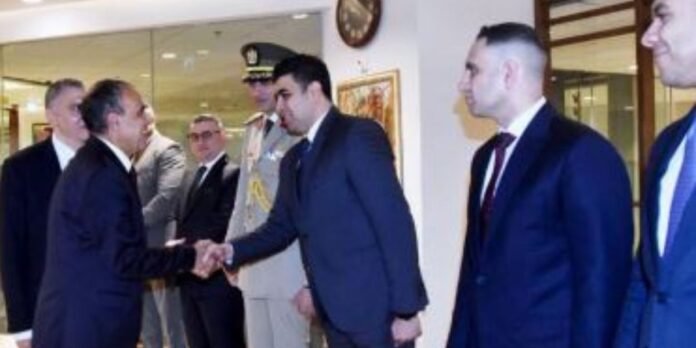
ISLAMABAD: Pakistan intensified its diplomatic outreach to ease tensions in the Middle East as Egyptian Foreign Minister Dr. Badr Abdelatty arrived in Islamabad on Saturday for an official visit.

According to the sources, at the invitation of Deputy Prime Minister and Foreign Minister Ishaq Dar, the Egyptian top diplomat is visiting Pakistan During the visit,

Dr. Badr Abdelatty will hold consultations on regional developments and call on the Prime Minister Shehbaz Sharif.

The visit reflects the close and brotherly relations between Pakistan and Egypt and their continued coordination on regional and international issues, according to the Foreign Office.

Islamabad will host high-level talks starting Sunday with Saudi Arabia, Turkiye, and Egypt as part of intensifying diplomatic efforts to address the ongoing war in the Middle East, according to the Ministry of Foreign Affairs.

The foreign ministers of Saudi Arabia, Prince Faisal bin Farhan Al Saud; Turkiye’s Hakan Fidan are scheduled to visit Islamabad from March 29 to 30.

During the visit, the ministers will hold in-depth consultations on a range of regional and international issues, with a particular focus on efforts to de-escalate tensions in the Middle East.

The visiting dignitaries will also meet with Prime Minister Shehbaz Sharif.

The Foreign Office said Pakistan attaches high importance to its relations with the three countries, describing them as “brotherly nations,” and noted that the visit would help strengthen cooperation and coordination on matters of mutual interest.

Pakistan has increasingly positioned itself as a key diplomatic facilitator amid the ongoing conflict, maintaining channels with both Iran and the United States.

Islamabad has played a role in relaying messages between the two sides as tensions continue, leveraging its ties with Tehran and its close relationships with Gulf states.

Also read:Floods in Kenya kill 108, displace thousands after weeks of heavy rains


Advertisment